
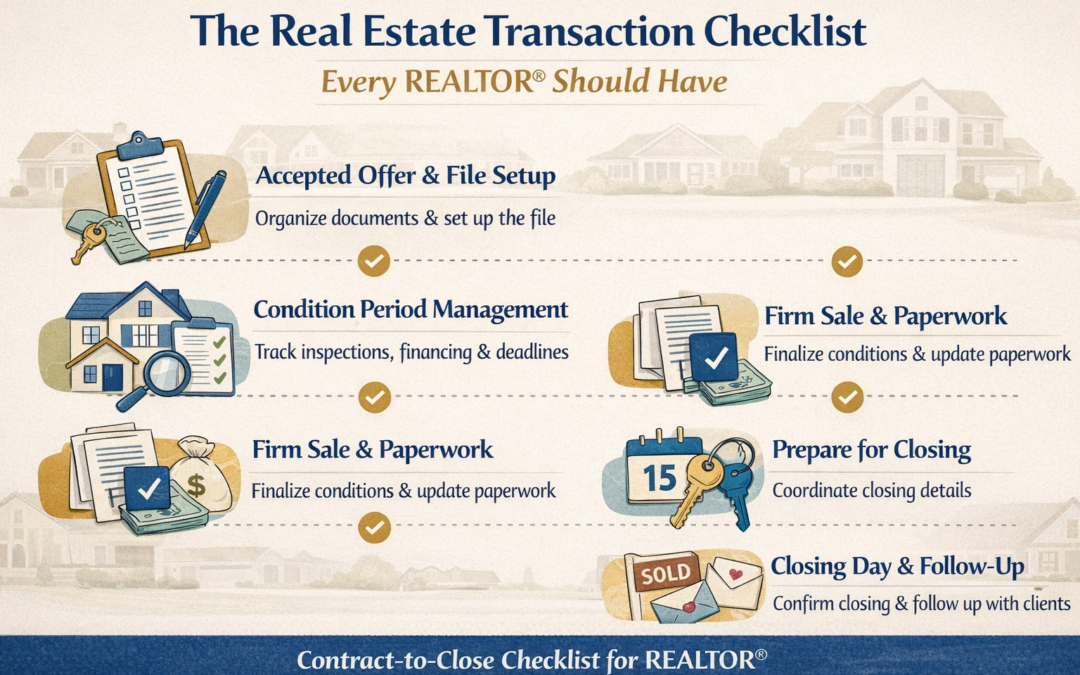
Every real estate transaction follows a series of important steps. From the moment an offer is accepted to the day the keys change hands, dozens of details must be tracked and completed.
For many REALTORS®, managing these details becomes more challenging as business grows. Multiple files may be active at the same time, each with its own deadlines, documents, and communication needs.
Without a clear checklist, it becomes easy for important tasks to be overlooked.
A structured transaction checklist helps ensure that every file moves forward smoothly and that clients experience a professional, well-organized process.
Below is an overview of the key stages many REALTORS® include in a contract-to-close workflow.
1. Accepted Offer and Initial File Setup
Once an offer is accepted, the first step is organizing the transaction file. This stage typically includes gathering signed agreements, confirming important dates, and preparing the documentation required by the brokerage.
At this stage REALTORS often:
- save signed agreements and disclosures
- record key dates such as condition deadlines
- create a transaction file in their system
- notify their brokerage of the accepted offer
- begin preparing the client communication timeline
Taking time to organize the file properly at the beginning helps prevent confusion later in the transaction.
2. Condition Period Management
The conditional period is one of the most important stages of a transaction. During this time inspections, financing approvals, and other conditions must be satisfied before the sale becomes firm.
REALTORS often track several tasks during this period.
These may include:
- scheduling property inspections
- confirming financing progress
- reviewing inspection reports
- negotiating condition amendments if needed
- monitoring condition removal deadlines
A clear checklist helps ensure that none of these steps are missed and that the timeline stays on track.
3. Condition Removal and Firm Sale
Once all conditions have been satisfied, the transaction moves forward as a firm sale.
This stage often includes:
- collecting signed condition removal forms
- distributing documentation to the brokerage
- confirming deposit arrangements
- updating transaction status in MLS or brokerage systems
- notifying clients that the sale is now firm
Clear documentation at this stage ensures that all parties have the same understanding of the transaction status.
4. Preparing for Closing
As the closing date approaches, several final steps must be coordinated.
These tasks may include:
- sending documents to the lawyers involved
- confirming final details with clients
- arranging key release procedures
- confirming possession date instructions
- coordinating any final walkthroughs if required
Careful coordination during this stage helps ensure that closing day proceeds smoothly.
5. Closing Day and Follow-Up
The transaction officially concludes when possession takes place and keys are released to the buyer.
However, successful REALTORS understand that the client relationship does not end at closing.
Many agents include follow-up steps such as:
- congratulatory messages to clients
- confirmation that keys were received
- reminders about utilities or home services
- requests for reviews or testimonials
- adding the client to long-term follow-up systems
These final steps help maintain relationships and encourage referrals.
Why Transaction Systems Matter
A clear checklist does more than keep files organized. It also improves the experience for clients.
When REALTORS operate with structured systems, clients notice the difference. Communication becomes more consistent, timelines feel more organized, and the overall experience feels more professional.
Over time, these small details contribute to stronger client relationships and increased referrals.
Final Thoughts
Every REALTOR develops their own workflow over time. However, most successful agents eventually rely on structured systems to manage their transactions.
A clear contract-to-close checklist provides organization, reduces stress, and helps ensure that each transaction receives the attention it deserves.
As a real estate business grows, systems like these become one of the most valuable tools an agent can have. Many REALTORS eventually develop their own systems, but structured operational support can make these processes easier to maintain as business grows.
 English